
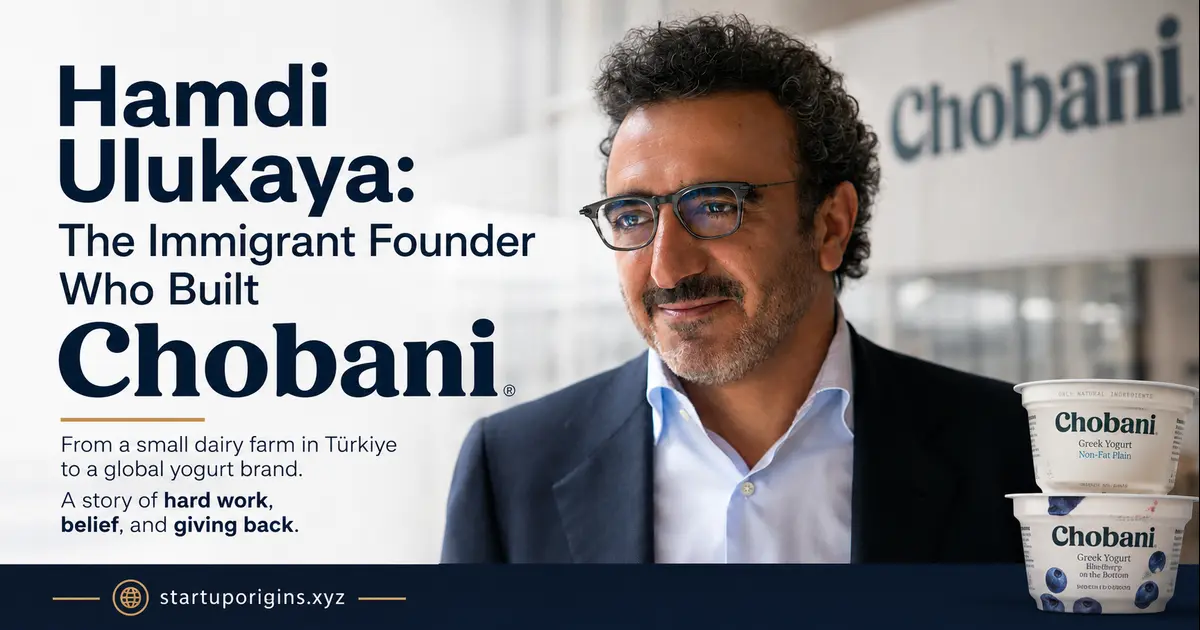
There’s a version of Hamdi Ulukaya’s story that gets told at business schools: immigrant buys distressed factory, builds billion-dollar brand, becomes case study. It’s accurate, and it’s also almost beside the point. The more interesting story is about a man who spent his childhood learning to read weather patterns and animal behavior on a farm in eastern Türkiye, and who ended up running a multibillion-dollar American food company essentially the same way — by trusting patience, instinct, and firsthand observation over the spreadsheets everyone else was using to make decisions.
That instinct is the throughline of his career. Understanding it explains far more about Chobani than any timeline of acquisitions or revenue milestones ever could.
A Childhood Measured in Seasons, Not Quarters
Ulukaya grew up in a Kurdish farming community near Iğdır, close to Türkiye’s borders with Armenia and Iran, in a family that raised sheep and goats and made cheese and yogurt by hand. It was not a business in the way that word is usually meant. It was simply how the family ate, and how it survived — a rhythm dictated by animals, seasons, and the slow, unhurried chemistry of fermentation, not by quarterly targets or growth curves.
That upbringing shaped something in him that would later look, to business journalists, like an unusual and even risky management philosophy: a willingness to let a product take as long as it needed to be right, even when every financial incentive pointed toward moving faster. Before he ever ran a company, he’d spent years watching milk turn into yogurt on a timeline that couldn’t be rushed no matter how much anyone wanted it to be.
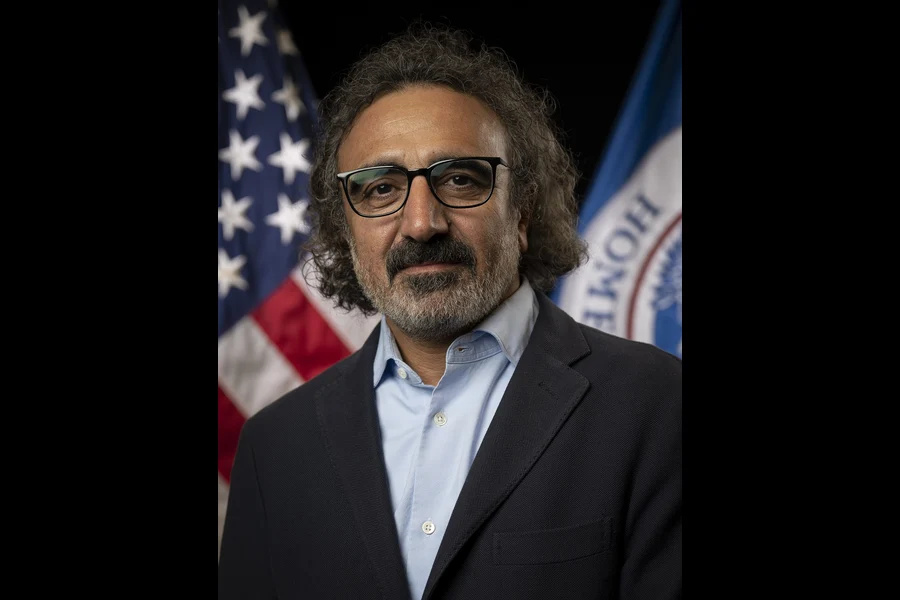
He came to the United States in 1994 to study English and business, without, by most accounts, any specific plan to build a dairy empire. The adjustment was not seamless. He arrived speaking limited English, in a country where his accent and his background marked him immediately as an outsider — an experience he has referenced in later interviews as formative to how he later thought about hiring people who looked and sounded like he once did. What pulled him back toward the industry he’d grown up in was almost accidental: he found the yogurt sold in American supermarkets thin and oversweetened compared to what he’d grown up eating, a reaction rooted more in memory and instinct than in market analysis. That reaction eventually led him to open Euphrates, a small feta cheese operation in upstate New York, sometime in the early 2000s — a modest, unglamorous business that put him inside America’s dairy supply chains without yet suggesting anything larger was coming.
Those early years in upstate New York mattered more to his eventual worldview than the balance sheet of a small feta company would suggest. Running Euphrates meant living and working inside small, economically struggling manufacturing towns — the same kind of towns that, a decade later, would supply much of Chobani’s workforce and, eventually, its resettled refugee employees. He wasn’t observing that world from the outside as a business-school case study. He was living in it, as an immigrant entrepreneur whose own English was still improving, in communities where a foreign accent was still unusual enough to be noticed. That experience is frequently cited, in his own later public remarks, as the origin of his conviction that immigrants and refugees make disproportionately loyal, hardworking employees when given a genuine opportunity — not an abstract policy position, but something closer to a memory of what it felt like to be the outsider hoping someone would take a chance on him.
Why Hamdi Ulukaya Thought Like a Farmer Before He Thought Like a CEO
Most food executives are trained to think in categories, quarters, and shelf space. Ulukaya’s earliest training was in none of those things — it was in animals, weather, and the specific patience required to let a fermentation process finish on its own schedule. That difference in training turned out to matter enormously once he was running an actual company.
When Ulukaya bought the shuttered Kraft plant in 2005, the financially rational move — the move a traditionally trained operator would have made — was to get a product to market as quickly as possible to start generating revenue against the debt he’d just taken on. Instead, he spent roughly two years refining Chobani’s Greek yogurt recipe, bringing in a master yogurt maker from Türkiye and repeatedly rejecting versions of the product that didn’t match the texture and tartness he remembered from childhood. That is not a conventional startup timeline. It is closer to how a farmer thinks about a herd or a harvest: some things cannot be accelerated without ruining them, and pretending otherwise just produces a worse result faster.
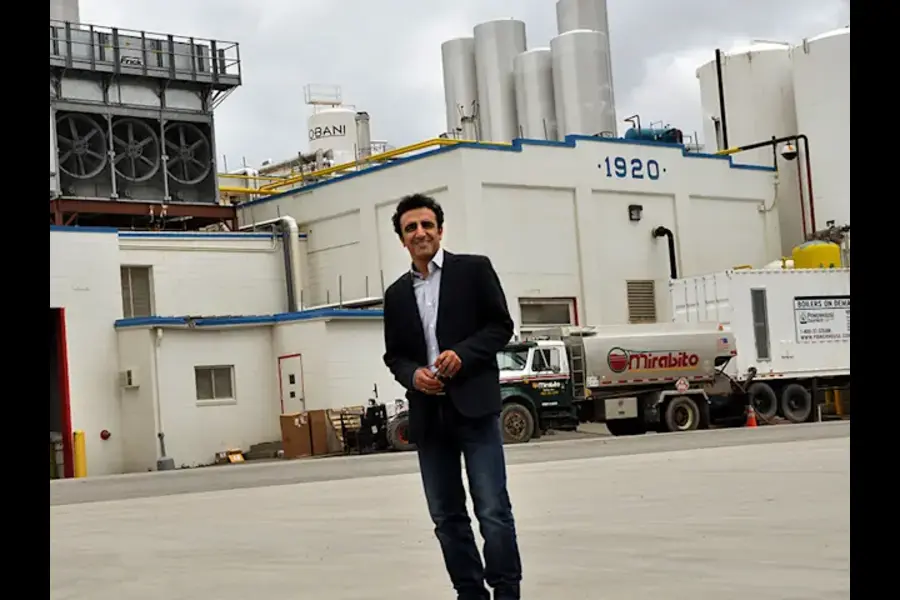
That same instinct shows up later in how Chobani approached growth. Rather than licensing the recipe out or chasing the fastest possible national rollout once demand exploded between 2008 and 2012, the company kept manufacturing in-house and reinvested aggressively in its own production capacity — first in New York, then in a massive new facility in Twin Falls, Idaho. It’s the difference between a founder optimizing for the next funding round and one who was, in a very literal sense, raised to think in years rather than fiscal quarters. Product quality, in Ulukaya’s account of the company’s early years, was never treated as one input to balance against speed — it was the entire premise the business was built on, a lesson he has said dates directly back to standards his family held on the farm long before Chobani existed.
That patience became cultural, not just personal. Employees who joined Chobani in its early years have described a workplace where getting the yogurt right was treated as a matter of identity, not just quality control — an atmosphere that traces directly back to a founder who grew up believing there was a right way and a wrong way to make yogurt, and that the difference was not something a marketing department could paper over.
Buying the Factory Everyone Else Ignored
In March 2005, a piece of junk mail advertising a defunct Kraft Foods yogurt plant in New Berlin, New York, landed on Ulukaya’s desk. Kraft had shut the facility down as part of a broader consolidation, and by the time he toured it, workers were dismantling equipment that some of their own families had operated for generations. His guide that day was the plant’s production manager, whose father had made yogurt in the same building and whose grandfather, before him, had made cream cheese there.
Nearly everyone who toured that plant, including Kraft’s own analysts, had concluded it wasn’t worth saving. Ulukaya’s read was different, and it was different specifically because of where he was standing when he made it: not as a packaged-goods executive weighing a declining category against shelf-space economics, but as someone who’d grown up eating a style of yogurt that essentially didn’t exist on American shelves at all. Where Kraft saw a failed product line in a shrinking category, he saw a product that had simply never been properly introduced to the market yet.
The Decision That Changed Hamdi Ulukaya’s Life Forever
The purchase itself was not encouraged by the people closest to him. Ulukaya has described in Harvard Business Review how his own attorney advised him against buying the plant — advice he heard and overrode anyway. He financed the purchase, reported at roughly $700,000 to $800,000, primarily through a loan backed by the U.S. Small Business Administration, at a moment when his existing feta business, Euphrates, was small enough that the debt represented genuine personal financial risk rather than a rounding error against a larger balance sheet.
The safer alternative was obvious: keep running Euphrates, stay inside a category he already understood, and avoid the capital burden of resurrecting an 85-year-old industrial facility with no guaranteed buyer for whatever it eventually produced. He rejected that path for a specific reason that had nothing to do with sentiment and everything to do with operational leverage — the factory came bundled with functioning processing equipment, established dairy supply relationships, and a workforce that already knew how to run a plant of that scale. Building that infrastructure from scratch, for a founder with no outside investors, would have taken years and capital he didn’t have.
What makes this the defining decision of his career isn’t simply that it worked. It’s that it reveals how he actually evaluates risk: not by asking whether a plan is safe by conventional standards, but by asking whether he personally understands something about the opportunity that the people walking away from it don’t. That same evaluative instinct — trusting a firsthand read over a consensus verdict — reappears at nearly every major inflection point in Chobani’s history, from the decision to sell Greek yogurt in the mainstream dairy aisle instead of a specialty section, to the decision, years later, to give employees a real ownership stake in a company he could have simply kept for himself.
From Factory Owner to Public Voice
Chobani’s Greek yogurt launched in October 2007, and its rapid growth over the following five years — crossing $1 billion in annual revenue by 2012 without a single outside equity investor — turned Ulukaya from a relatively obscure upstate manufacturer into a recognizable figure in American business media. What distinguished him in that coverage wasn’t just the growth numbers. It was a set of public positions that ran noticeably against the grain of how large food-company founders typically presented themselves.
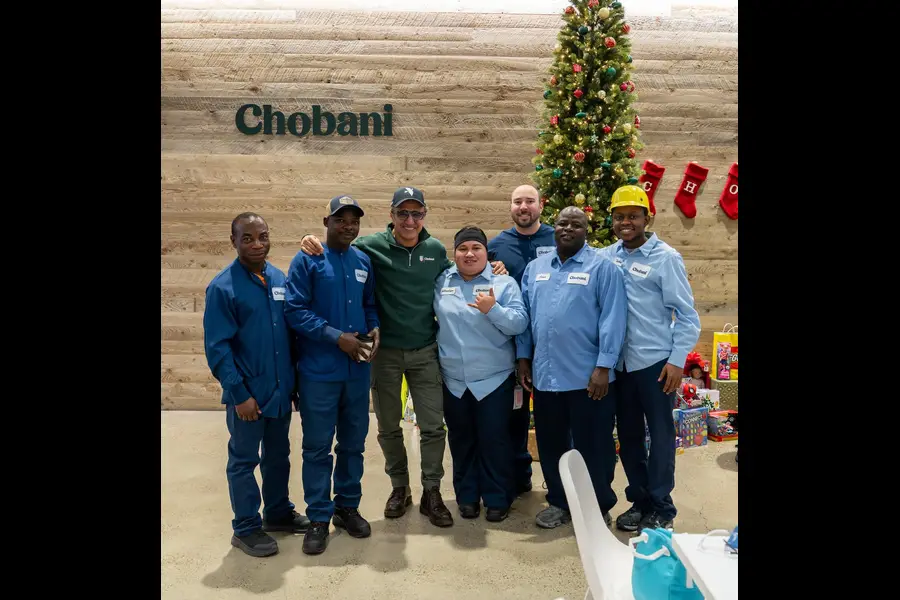
He became known, in particular, for hiring refugees resettling near Chobani’s plants in upstate New York and Idaho — a practice he has framed, in reporting by Inc., less as corporate social responsibility and more as sound business sense: refugees, in his account, tend to bring exceptional work ethic and loyalty to employers willing to give them a genuine chance. By some counts, roughly 30 percent of Chobani’s workforce at its New York and Idaho plants has consisted of immigrants and refugees, a proportion far higher than the food manufacturing industry’s norm.
The Leadership Philosophy That Defined Chobani
The clearest expression of Ulukaya’s leadership philosophy came in 2016, when he announced that Chobani employees would receive shares representing up to 10 percent of the company’s future value — a program that, depending on Chobani’s eventual valuation, stood to make some longtime factory workers into millionaires. It was an unusually direct wealth-sharing gesture from a founder who had retained full ownership through more than a decade of explosive growth, and it was consistent with a broader set of positions he has taken publicly: that businesses have obligations to their employees and communities that extend beyond shareholder return, and that treating workers as genuine stakeholders produces better business outcomes, not just better headlines.
That philosophy is easy to dismiss as branding — plenty of companies talk about purpose while quietly optimizing for the same short-term metrics as everyone else. What separates Ulukaya’s version is how consistently it shows up in decisions that cost the company something. Sharing equity actually dilutes a founder’s ownership. Hiring and training refugee workers, several of whom arrive without English fluency, actually costs more in the short term than hiring locally available labor. Turning down early buyout offers from larger food conglomerates — offers reportedly worth billions of dollars in Chobani’s early growth years — meant forgoing a guaranteed personal fortune in favor of retaining control over a company whose long-term value was still unproven at the time.
Each of those decisions is a case where the “responsible capitalism” framing and the actual balance sheet pulled in opposite directions, and Ulukaya chose the framing anyway. That consistency, more than any single interview or mission statement, is what turned his stated values into an actual competitive advantage: a workforce with unusually high loyalty and retention, a brand story that differentiated Chobani in a crowded grocery aisle without a national ad budget, and a public reputation that has, on balance, made it easier rather than harder to recruit talent, attract press coverage, and eventually raise capital on his own terms.
By the late 2010s, Ulukaya had turned that philosophy into something closer to a public thesis than a private management style. He published The Anti-CEO Playbook, laying out his case for treating employee wellbeing, community investment, and product integrity as sources of competitive advantage rather than costs to be minimized — a framing he has carried into appearances at forums like the World Economic Forum in Davos, where he has argued that businesses bear direct responsibility for the communities they operate in, including obligations to displaced and resettled workers. That advocacy hasn’t always been universally embraced; Chobani has, at points, drawn criticism and even boycott threats over its refugee-hiring practices from commentators who viewed the policy as politically motivated rather than business-driven. Ulukaya’s public response has been largely unwavering: he has continued to frame the hiring practice as sound operational logic, not as a statement designed to provoke controversy, and Chobani has not reversed course.
Staying at the Helm Through Growth, Setbacks, and Scale
Ulukaya’s leadership hasn’t been uniformly smooth. Chobani faced a well-publicized mold contamination issue and product recall in 2013, a moment that tested the same quality-first identity the company had built its reputation on — the recall meant pulling product his own team had spent years perfecting, at real cost to both revenue and brand trust, rather than quietly managing the problem and hoping it went unnoticed. It has also weathered years of intense competitive pressure as larger rivals — Dannon, Yoplait, and eventually a wave of private-label and dairy-alternative competitors — moved into the Greek yogurt category Chobani had done the most to popularize, narrowing margins in a business that had built its early growth on being the clear category leader.
Through those pressures, Ulukaya has remained Chobani’s CEO and majority owner, a level of founder continuity that is unusual for a company that has grown from a single regional factory into a multibillion-dollar diversified food and beverage business. Many founders in his position — facing an established competitor’s counterattack, a public recall, and years of pressure to bring in outside capital and professional management — eventually cede day-to-day control, either by choice or by investor pressure. Ulukaya never took on the kind of outside equity that would have forced that outcome, which meant the decisions made during Chobani’s harder years remained his to make.
That continuity has let the company keep expanding on his terms. Chobani moved into oat milk and coffee creamers in 2019, acquired the ready-to-drink coffee brand La Colombe for roughly $900 million in 2023, and added Daily Harvest’s frozen meals and smoothies to its portfolio in 2025. By 2024, Chobani’s annual revenue had reached approximately $3 billion, and in October 2025 the company raised $650 million in new equity at a roughly $20 billion valuation — a milestone that placed Ulukaya, who has retained majority ownership throughout, among the wealthiest self-made entrepreneurs in American food manufacturing. Chobani had filed confidentially for an IPO in 2021 before withdrawing those plans the following year amid volatile public markets, and Ulukaya has said the company remains prepared to go public whenever conditions favor it, while continuing to operate, for now, as a private company headquartered in New York City.
The Person Behind the Brand
What ultimately distinguishes Ulukaya from many founders profiled in the same business-magazine format is how little his public persona seems to have changed as the company scaled. He is still, by most accounts from employees and journalists who’ve covered him over two decades, recognizably the same person who toured a dying Kraft factory in 2005 and saw something worth saving in it — someone whose decisions still trace back to a childhood spent watching milk become yogurt on a farm that had nothing to do with quarterly earnings.
That continuity is, in its own way, the real lesson of his story. Founders are often told that scaling a company requires becoming a different kind of person — more detached, more numbers-driven, less sentimental about the product itself. Ulukaya’s career is a fairly direct rebuttal to that idea. The same instincts that told him a shuttered factory was worth buying in 2005 are, by his own account, the same instincts guiding the company’s decisions two decades and $20 billion in valuation later.
For the fuller story of the factory purchase itself, see our companion feature, How Chobani Started in an Abandoned Factory. For a look at how the company scaled without a national ad budget, read How Chobani Grew Without Big Advertising Budgets. And for founders looking to apply these lessons to their own ventures, What Chobani Teaches Every Startup Founder breaks down the operating principles behind Ulukaya’s approach.
Frequently Asked Questions
Who is Hamdi Ulukaya?
Hamdi Ulukaya is a Turkish-born, Kurdish-American entrepreneur who founded Chobani in 2005 after purchasing an abandoned Kraft Foods yogurt factory in New Berlin, New York. He remains the company’s CEO and majority owner.
Where was Hamdi Ulukaya born?
Ulukaya was born in Iğdır Province in eastern Türkiye, into a Kurdish family involved in dairy farming and cheesemaking.
How did Hamdi Ulukaya build Chobani?
He bought a closed Kraft Foods yogurt plant in 2005 using an SBA-backed loan, spent roughly two years developing a Greek-style yogurt recipe, and launched Chobani in October 2007. The company grew to $1 billion in annual revenue by 2012 without outside equity investors.
What is Hamdi Ulukaya’s leadership philosophy?
Ulukaya has emphasized employee ownership, inclusive hiring of refugees and immigrants, long-term thinking over short-term profit, and product quality as a founding principle — most visibly through a 2016 program granting Chobani employees equity in the company.
How much is Hamdi Ulukaya worth?
Ulukaya remains Chobani’s majority owner, holding an estimated 68% stake. Following the company’s October 2025 equity raise at a roughly $20 billion valuation, he ranks among the wealthiest self-made entrepreneurs in American food manufacturing.
Disclamer
This article is based on publicly available reporting from outlets including Harvard Business Review, Inc., Forbes, and NBC News, as well as Hamdi Ulukaya’s public statements and Chobani’s own communications. Some figures vary slightly across sources and are presented with that range noted. This is an independent editorial feature and is not affiliated with or endorsed by Chobani, LLC or Hamdi Ulukaya.

Anup Kumar Yadav is the founder of StartupOrigins.xyz, where he researches and publishes detailed stories about the world’s most successful startups. His work explores founder journeys, funding milestones, growth strategies, and the lessons entrepreneurs can learn from them.