
- The Problem Nobody Questioned
- Why Everyone Accepted Expensive Glasses Until Warby Parker Challenged the Industry
- Turning a Classroom Idea Into a Company
- The Decision That Changed Warby Parker Forever
- Launch Day and the Waitlist Nobody Planned For
- The Market Gap Nobody Else Was Solving
- Home Try-On as the Turning Point
- Building the Brand Beyond the Product
- From Startup to Public Company
- The End of an Era: Sunsetting Home Try-On
- Frequently Asked Questions
- Conclusion
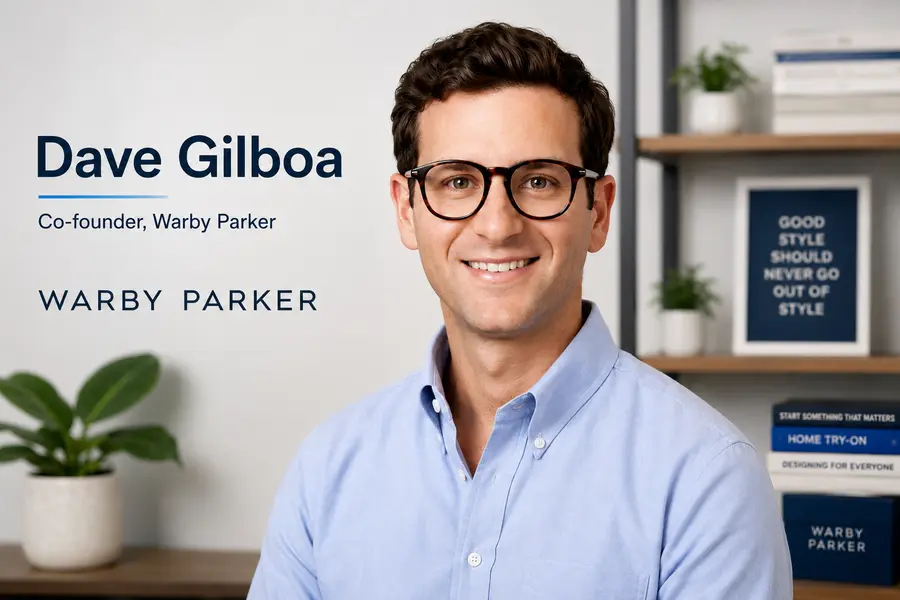
In the fall of 2008, a first-year MBA student at the University of Pennsylvania’s Wharton School spent an entire semester squinting at whiteboards because he couldn’t bring himself to spend $700 on a replacement pair of glasses. He’d lost the old pair somewhere in Southeast Asia during a backpacking trip before school started, and the price tag for new frames felt absurd next to the cost of, say, a new phone. So he simply went without.
That student was Dave Gilboa, and his stubborn refusal to pay what he considered an inflated price for a commodity item would, within two years, help create one of the most closely studied startups of the past two decades. Warby Parker didn’t begin as a grand plan to topple a global industry. It began as one person’s mounting irritation, shared over beers with three classmates who happened to feel the same way.
This is the story of how Warby Parker started — how one person’s irritation became a business, and how a company selling $95 glasses out of a Philadelphia apartment grew into a publicly traded, nine-figure-revenue retailer with hundreds of stores across North America.
The Problem Nobody Questioned
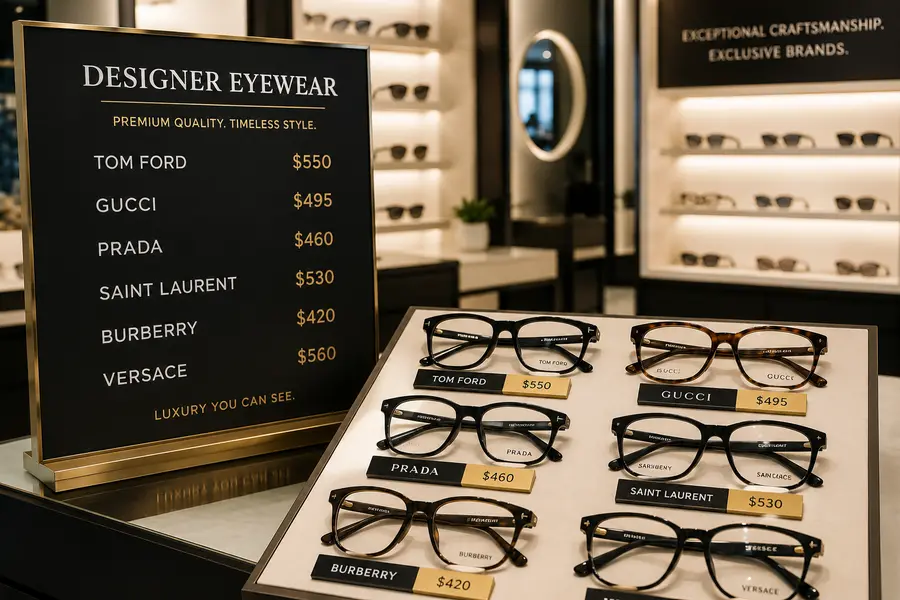
By the time Gilboa arrived at Wharton, the eyewear industry had settled into a comfortable arrangement that most consumers had simply learned to accept. A single pair of frames could easily run several hundred dollars, even though the raw materials and manufacturing costs behind them were, relatively speaking, modest. Buying glasses meant walking into an optical shop, choosing from whatever brands happened to be on the wall, and paying whatever the register said — because there wasn’t much of an alternative.
Gilboa wasn’t the only one who’d noticed. Neil Blumenthal, another Wharton student, had spent time before business school working at VisionSpring, a nonprofit focused on getting affordable glasses to people in developing countries who couldn’t otherwise access them. That work had given him a front-row seat to just how disconnected retail eyewear prices were from what glasses actually cost to produce. He understood the manufacturing side of the business in a way most shoppers — and most MBA students — never would.
The two men, along with fellow classmates Andrew Hunt and Jeffrey Raider, became close during their first year at Wharton. According to accounts the founders have given CNBC and other outlets over the years, the idea crystallized during casual conversation — in a computer lab in Wharton’s Huntsman Hall, and later at a nearby bar over pints of beer, where the four of them worked through just how large the pricing gap really was. What began as griping turned into a working theory: if a small team could design its own frames, manufacture them directly, and sell them straight to customers online, they could offer genuinely well-made glasses for a fraction of the price the industry had trained people to expect.
It’s worth pausing on why this idea felt so improbable in 2009. Online retail was still relatively young in categories that required precise fit, and eyewear seemed like an especially poor candidate — how do you sell something that has to sit correctly on someone’s face, matched to a specific prescription, without ever letting them try it on? Investors the founders spoke with in the early days were openly skeptical. Nobody had proven that people would buy prescription eyewear sight unseen from a website with no retail footprint and no brand recognition.
Why Everyone Accepted Expensive Glasses Until Warby Parker Challenged the Industry
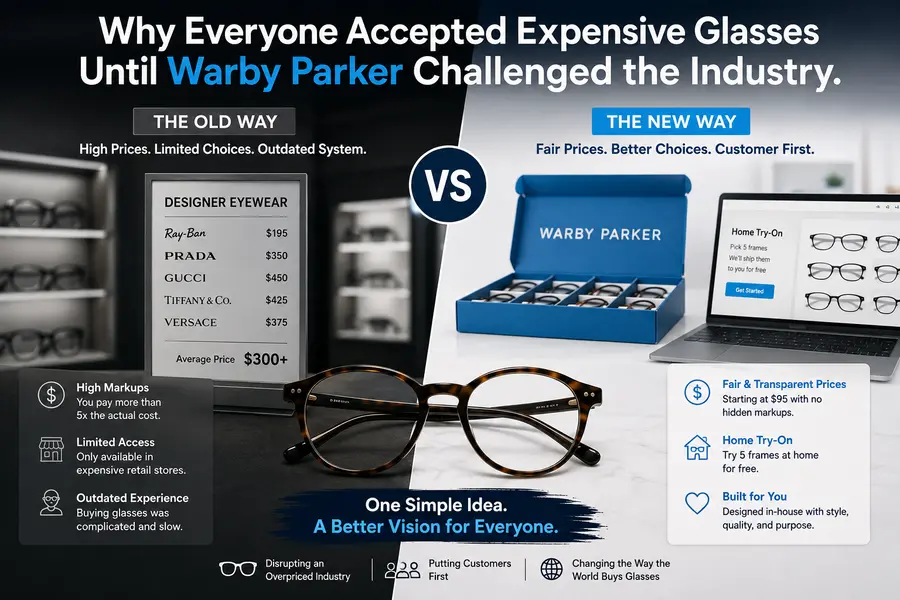
To understand why the founders believed disruption was even possible, it helps to understand how unusual the eyewear market had become. For decades, a small number of companies controlled enormous portions of global eyewear manufacturing, distribution, and retail — with Italy’s Luxottica frequently cited as the most dominant player, owning house brands, holding licenses to produce eyewear for major fashion labels, and operating vast retail chains under multiple banners. The exact scale of that dominance has been debated; a widely repeated claim that Luxottica controlled roughly 80 percent of the industry has never been fully substantiated by independent data, and Snopes has noted the figure is difficult to verify. What is well documented is that Luxottica built a genuinely vertically integrated empire — manufacturing frames, licensing dozens of fashion brands, and controlling major retail chains — giving it outsized influence over which frames reached store shelves and at what price. In 2018, Luxottica merged with lens maker Essilor to form EssilorLuxottica, which today holds close to a quarter of the global eyewear market on its own.
When a handful of companies control both the manufacturing and the retail shelf space in an industry, consumers rarely see the true cost structure behind a product. That was precisely the dynamic in eyewear. Frames that cost a few dollars to produce could be marked up dramatically by the time they reached a customer’s face, and because so few companies controlled so much of the supply chain, there was limited competitive pressure to bring prices down. Consumers didn’t have many independent brands to compare against, so the going rate simply became the accepted rate. Most people didn’t think to question why glasses cost what they did any more than they’d question the price of a gallon of milk — it was just how the category worked.
The founders’ bet was that this arrangement had created a gap wide enough to walk through: if you could strip out the licensing fees, the wholesale markups, and the retail middlemen, and instead design, manufacture, and sell frames directly to the people who’d wear them, you could offer comparable quality at a dramatically lower price — and still build a sustainable, profitable business. It was a simple idea. Executing it required rethinking nearly every part of how eyewear traditionally reached customers.
Turning a Classroom Idea Into a Company
Blumenthal’s background at VisionSpring turned out to be the linchpin. He already had relationships with eyewear manufacturers and a working knowledge of how frames were actually produced, which meant the founders weren’t starting from zero on the supply side. The team spent roughly a year and a half between conceiving the idea and actually launching, much of it spent designing frames in-house and building relationships with manufacturers who could produce them at the quality level they wanted.
They also spent an unusual amount of time on something many early-stage founders treat as an afterthought: the name. According to the founders, they considered more than 2,000 possibilities before landing on one. The eventual choice traced back to a visit one of the co-founders made to a Jack Kerouac exhibition at the New York Public Library, where he came across two minor character names from Kerouac’s journals — Zagg Parker and Warby Pepper. Combined, they became Warby Parker: a name with no obvious connection to eyewear, but one that carried a literary, countercultural edge the founders felt matched the brand they wanted to build. (The company’s formal corporate name, JAND Inc., is a nod to the founders’ first initials; Warby Parker became its public-facing trade name.)
Money came from the founders themselves. Each contributed roughly $30,000, pooling together $120,000 in savings to fund inventory, a website, and the earliest operations — all run out of Blumenthal’s Philadelphia apartment while the four of them were still finishing their MBAs. None of them drew a salary in those first months. It was, by any conventional measure, a bootstrapped operation with far more ambition than capital.
The Decision That Changed Warby Parker Forever
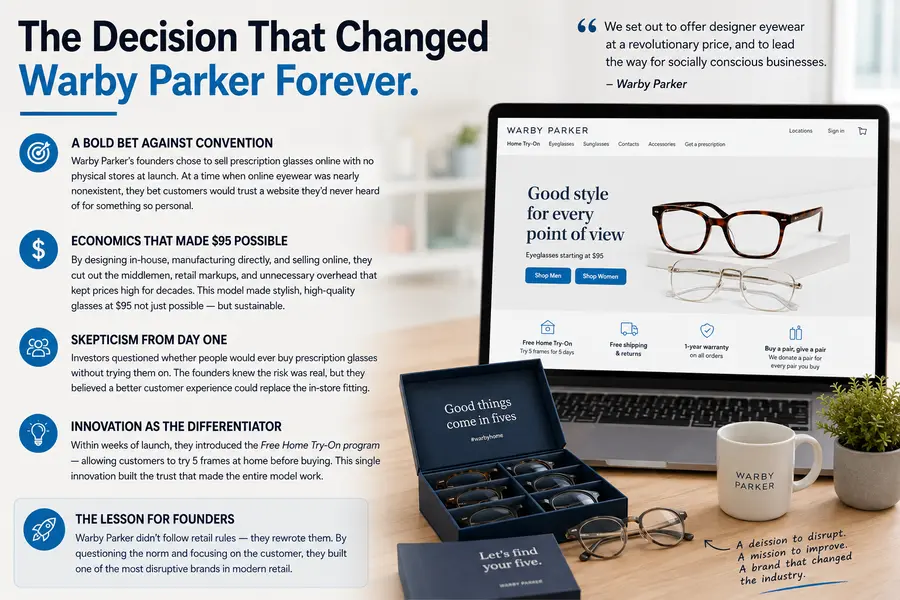
Every startup origin story has a hinge point — a decision that, in hindsight, defines everything that follows. For Warby Parker, that decision was choosing to sell prescription glasses directly to consumers online, with no physical stores at launch, at a moment when online eyewear sales made up a vanishing sliver of the market.
This was, by conventional retail logic, backwards. Eyewear had always been a try-before-you-buy category. Opening a small flagship store first — the safer, more traditional path other founders might have chosen — would have let customers handle frames, get fitted by staff, and walk out with glasses the same day. It would have looked and felt like every other eyewear retailer, just smaller and cheaper. Instead, the founders bet the entire company on the idea that customers would trust a website they’d never heard of to sell them something as personal and fit-dependent as prescription eyewear.
The reasoning behind that bet came down to economics as much as ambition. Physical retail meant rent, staff, inventory sitting on shelves, and all the overhead that eyewear’s traditional markups existed to cover in the first place. Selling online — designing frames in-house, manufacturing directly, and shipping straight to customers — let the company skip nearly every layer of cost that had kept prices high for decades. It was the only structure that made a $95 pair of glasses mathematically possible while still leaving room for the company to survive.
The risk, of course, was that nobody had proven consumers would actually buy that way. Investors the founders pitched in the earliest days pushed back on exactly this point, questioning whether people would ever purchase prescription eyewear without trying it on first. The skepticism wasn’t unreasonable — it reflected how untested the entire premise was. What the founders were really betting on wasn’t just a lower price; it was that they could invent a mechanism sturdy enough to replace the in-store fitting experience entirely. That mechanism would arrive within weeks of launch, and it would end up defining the company more than almost anything else they built.
Launch Day and the Waitlist Nobody Planned For
WarbyParker.com went live on February 15, 2010. The date wasn’t entirely the founders’ choice. Roughly two years after they’d first started working on the idea, GQ had approached Blumenthal about featuring the still-unlaunched company in an upcoming issue. The founders, assuming they’d have the site running well before the story hit newsstands, agreed. When they learned the issue would publish on February 15, they realized their real launch date had just been set for them, ready or not.
GQ’s piece, published alongside a feature in Vogue the same day, described the young company’s home try-on concept and dubbed it “the Netflix of eyewear” — a line that would follow Warby Parker for years afterward. Within 48 hours of the stories hitting newsstands, orders overwhelmed the young company so completely that Blumenthal had to temporarily suspend the very home try-on program the press had just celebrated. The company hit its first-year sales targets within three weeks of launch. Its most popular fifteen styles sold out within a month. A waitlist of roughly 20,000 people formed as the founders scrambled to secure more inventory from manufacturers.
For a company with no advertising budget and four sleep-deprived MBA students as its entire staff, that kind of demand created a genuine operational crisis. But the founders’ response to the chaos became, in its own way, as important to the company’s identity as the low prices themselves. Rather than treat the waitlist as a logistics problem to manage quietly, Blumenthal and the team personally emailed and called customers who were waiting, explaining the delays and, when possible, inviting local customers to the apartment to try on whatever sample frames remained. It was an improvised, unscalable gesture — and it worked. Customers who might have written off a young company for stumbling out of the gate instead became some of its most vocal early advocates.
The Market Gap Nobody Else Was Solving
It’s worth asking a fair question: if the eyewear industry’s pricing was genuinely this disconnected from its costs, why hadn’t anyone else built this business already? Part of the answer is structural. Incumbent retailers had little incentive to challenge a pricing model that was working extremely well for them, and companies with the manufacturing scale to produce frames cheaply generally also owned the retail channels selling them at a markup — there was no obvious profit motive pushing insiders toward disruption.
The other part of the answer is that selling eyewear online was, at the time, viewed with real skepticism across the retail world, not just by the founders’ early investors. Less than 2.5 percent of glasses sales in the U.S. happened online when Warby Parker launched, according to figures the co-founders have cited in later interviews — a number that reflected genuine consumer hesitation about buying something so fit-specific sight unseen, not simply a lack of retailers trying. Most attempts at online eyewear before Warby Parker had struggled precisely because they hadn’t solved the try-on problem; they’d simply moved a difficult shopping experience onto a screen without making it any easier.
Warby Parker’s validation of the opportunity came from treating that friction as the central design problem to solve, rather than an inconvenient side effect of selling online. The company’s answer was the Home Try-On program: customers could choose five frames from the website, have them shipped for free, wear them around the house for five days, and return whichever ones they didn’t want — no cost, no obligation. It directly answered the one objection every skeptical investor and eyewear traditionalist had raised. You didn’t have to trust a photo or a size chart. You could put the actual physical glasses on your actual face before spending a dollar.
Home Try-On as the Turning Point
If the direct-to-consumer decision was the strategic bet that made Warby Parker possible, Home Try-On was the mechanism that made customers believe in it. The program let the company sidestep the industry’s oldest argument against online eyewear sales — that fit and appearance were too personal to trust to a website — by simply removing the financial risk from trying. Customers had nothing to lose by requesting a box of frames, and once frames were sitting on a customer’s kitchen table, the company’s design work did the rest of the persuading.
The program also generated something no advertising budget could easily buy: conversation. Friends compared frames with each other, posted photos asking for opinions, and referred other friends to request their own boxes. Co-founder estimates cited in later interviews suggested roughly half of the company’s traffic in its early years came from word of mouth rather than paid marketing — a remarkable figure for a retail startup with no physical presence and virtually no ad spend at launch.
Home Try-On remained Warby Parker’s signature offering for a decade and a half, closely associated with the brand even as the company built out an increasingly large network of physical stores. That association didn’t last forever, though — a detail worth noting for anyone tracking the company’s more recent evolution, which this article returns to below.
Building the Brand Beyond the Product
Early growth brought early complications, as it does for most startups riding faster-than-expected demand. The company raised a $12.5 million Series A round in 2011, which allowed it to move out of Blumenthal’s apartment and into a dedicated headquarters in New York City, along with hiring beyond the founding four. Subsequent funding rounds — including investment from firms like Tiger Global Management, General Catalyst, and Menlo Ventures — funded expansion into new product categories and, eventually, physical retail.
That retail expansion turned out to be more complementary than contradictory to the company’s online-first origins. Responding to customer requests to see and try frames in person, Warby Parker opened its first permanent store in New York’s SoHo neighborhood in 2013. Rather than treating stores as a retreat from the direct-to-consumer model, the company folded them into it — early locations reportedly generated retail productivity figures comparable to those of established luxury and tech retailers, reinforcing the idea that Warby Parker’s brand, not just its low prices, was driving demand.
The company also built its giving model into the core of its identity from day one. Through the Buy a Pair, Give a Pair program, Warby Parker donates a pair of glasses to someone in need for every pair sold, working with nonprofit partners including VisionSpring — the same organization where Blumenthal had worked before co-founding the company. By 2026, the company reported having distributed more than 25 million pairs of glasses through this initiative and its broader nonprofit partnerships since its founding.
For readers interested in how the company’s culture and values took shape from the founders’ individual journeys, the StartupOrigins piece Neil Blumenthal: The Founder Who Helped Reinvent the Eyewear Industry traces his path from public policy disillusionment to nonprofit work to co-founding a billion-dollar brand.
From Startup to Public Company
Warby Parker spent the 2010s methodically building out its retail footprint and product lineup, adding categories like prescription sunglasses, progressive lenses, and — in 2019 — daily contact lenses. By the time the company decided to go public, it had grown into a business with hundreds of millions of dollars in annual revenue and more than 145 stores.
Rather than pursue a traditional IPO, Warby Parker chose a direct listing, a path only a handful of companies — Spotify and Coinbase among them — had used before. On September 29, 2021, the company’s Class A shares began trading on the New York Stock Exchange under the ticker WRBY. Shares opened at $54.05, well above the company’s $40 reference price, and closed the day up 36 percent, giving Warby Parker a market valuation above $6 billion. Co-CEO Dave Gilboa told CNBC on the day of the listing that the company held less than 1 percent market share in its category at the time — a statement that framed the public offering not as an endpoint, but as fuel for a much longer runway of growth.
Going public didn’t insulate the company from the ordinary pressures of running a retail business at scale. Warby Parker’s path to profitability took years longer than some early investors might have hoped, and its stock has traded well below its 2021 debut price for long stretches since. But the underlying growth engine — new stores, a widening product line, and a loyal customer base — kept expanding. For a closer look at how the company scaled from four founders to a national retail footprint, see How Warby Parker Grew by Reinventing the Eyewear Business.
The End of an Era: Sunsetting Home Try-On
Perhaps the most striking recent chapter in Warby Parker’s story is one that would have seemed unthinkable to the founders in 2010: the company deciding it no longer needed the very program that built its reputation. In August 2025, on a call discussing second-quarter earnings, Warby Parker announced it would sunset the Home Try-On program by the end of the year.
The reasoning tracked directly back to how much the company had changed since 2010. Co-founder and co-CEO Neil Blumenthal told analysts that the vast majority of recent Home Try-On customers lived within thirty minutes of a physical Warby Parker store — a striking fact for a company that opened that same month with its 300th retail location. Improvements in virtual try-on technology, including a true-to-scale digital tool and an AI-powered shopping assistant called Advisor, had also made it easier for online shoppers to preview frames without physically shipping them a box of samples. The company that pioneered try-before-you-buy eyewear had, in effect, built its way out of needing the very innovation that made it famous.
The timing came alongside other significant transitions. Longtime CFO Steve Miller stepped down after fourteen years with the company, with co-founder Dave Gilboa temporarily assuming financial oversight duties. It was a reminder that even companies built on a singular defining innovation eventually have to decide when that innovation has run its course — a lesson explored in more depth in What Warby Parker Teaches Every Startup Founder.
Frequently Asked Questions
How did Warby Parker start?
Warby Parker started in 2009 when four Wharton MBA students — Neil Blumenthal, Dave Gilboa, Andrew Hunt, and Jeffrey Raider — decided to build a company that would sell well-designed prescription eyewear directly to consumers online at a fraction of typical retail prices. The idea grew out of Gilboa’s frustration after losing an expensive pair of glasses and going without replacements for a semester because of the cost.
Who founded Warby Parker?
Warby Parker was co-founded by Neil Blumenthal, Dave Gilboa, Andrew Hunt, and Jeffrey Raider, all MBA students at the University of Pennsylvania’s Wharton School at the time.
When did Warby Parker launch?
Warby Parker officially launched its website on February 15, 2010.
Why is it called Warby Parker?
The name combines two minor character names — Zagg Parker and Warby Pepper — that one of the co-founders discovered in Jack Kerouac’s journals during an exhibit at the New York Public Library.
What made Warby Parker different from other eyewear companies?
Warby Parker designed and manufactured its own frames, sold them directly to consumers online without traditional retail markups, and introduced the Home Try-On program, which let customers test five frames at home for free before buying.
Is the Home Try-On program still available?
No. Warby Parker announced in August 2025 that it would sunset the Home Try-On program by the end of that year, citing the growth of its physical store network and improved virtual try-on tools as replacements.
Is Warby Parker a public company?
Yes. Warby Parker went public via a direct listing on the New York Stock Exchange on September 29, 2021, under the ticker symbol WRBY.
How many stores does Warby Parker have?
Warby Parker ended 2025 with 323 stores across 102 markets in the United States and Canada, with plans to open roughly 50 more in 2026.
Conclusion
Warby Parker’s founding story resists the tidy arc that so many startup retrospectives try to impose on it. There was no singular flash of genius — just four business school students who kept returning to the same uncomfortable question: why does this cost so much? The answer they eventually built wasn’t just a cheaper product. It was a rethinking of the mechanics an entire industry had relied on for decades, executed by a team willing to bet their savings, their unfinished degrees, and their credibility on the idea that customers would trust a website they’d never heard of.
What’s followed — a chaotic launch, a defining try-on innovation, a decade of retail expansion, a Wall Street debut, and the eventual retirement of the very feature that made the company famous — reads less like a straight line and more like a company continually rebuilding itself around whichever tool best solves its customers’ hesitation at that moment in time. That willingness to abandon even a signature innovation once it’s served its purpose may be as instructive a lesson as the original idea itself.
Disclaimer: This article is intended for informational and editorial purposes as part of StartupOrigins’ ongoing coverage of startup founding stories. It draws on publicly available interviews, company disclosures, SEC filings, and reporting from outlets including CNBC, Bloomberg, Forbes, Fortune, Fast Company, Inc., and Retail Dive. All figures and quotations are attributed to their original sources where identified. StartupOrigins is not affiliated with Warby Parker Inc. Business and financial details are current as of August 2026 and are subject to change; readers should consult Warby Parker’s official investor relations materials for the most current information.

Anup Kumar Yadav is the founder of StartupOrigins.xyz, where he researches and publishes detailed stories about the world’s most successful startups. His work explores founder journeys, funding milestones, growth strategies, and the lessons entrepreneurs can learn from them.