
Published: June 2026 | StartupOrigins | Category: Startup Origins
Introduction
Picture Jason Citron in early 2015, sitting in a small office in Burlingame, California, staring at user data he doesn’t want to believe.
The game his company had spent two years building—a tablet-only multiplayer battle arena called Fates Forever—was bleeding out quietly. The download numbers weren’t moving. The tablet gaming market that had looked so inevitable in pitch decks and investor meetings had turned out to be a mirage. The serious gamers, the ones who would grind a MOBA for five hundred hours, were still glued to their PCs. They weren’t picking up iPads to fight strangers online. The audience Hammer & Chisel had built the entire company around simply wasn’t there.
- Introduction
- Who Founded Discord?
- The Success Before Discord: OpenFeint
- Hammer & Chisel and the Dream of Building a Game
- The Rise and Fall of Fates Forever
- The Unexpected Discovery
- The Decision to Pivot
- Launching Discord in 2015
- Why Discord Grew So Quickly
- The Discord Growth Timeline
- How Discord Expanded Beyond Gaming
- What Made Discord Different?
- Conclusion
- Disclaimer
What Citron kept coming back to, though, was a different number. A weird number. Players who had found the game were using its built-in voice and text chat features—a lot. More than they were playing the actual game.
In a different frame of mind, that data point looks like another wound. If people are talking more than they’re playing, what does that say about the game you spent two years making? But Citron flipped the question. What if the chat wasn’t a consolation prize? What if it was the product—and the game was just the packaging nobody wanted?
That reframe, made during the bleakest stretch of the company’s short life, is how Discord started — not with a vision for a communication platform, but with a game that was quietly dying and a chat feature nobody had planned to build a company around.
Today, Discord is one of the most widely used communication platforms on the internet, with over 200 million monthly active users as of late 2025. It hosts communities built around gaming, software development, art, education, finance, AI, music, and hundreds of subjects its founders never planned for. It confidentially filed for a U.S. IPO in January 2026. It once turned down a reported $12 billion acquisition offer from Microsoft.
None of that was the plan. The plan was to build a great game. The game failed. And buried inside that failure was something worth far more than the game ever could have been.
Who Founded Discord?
Jason Citron was born in San Francisco in 1984 and grew up in South Florida. His entry point into technology was pure obsession—he was a video game kid who wanted to understand how the things he loved were built. By the time he was thirteen, he had taught himself to code in QBasic and written a text-based RPG. He later studied Game Design and Development at Full Sail University in Florida, graduating in 2004.
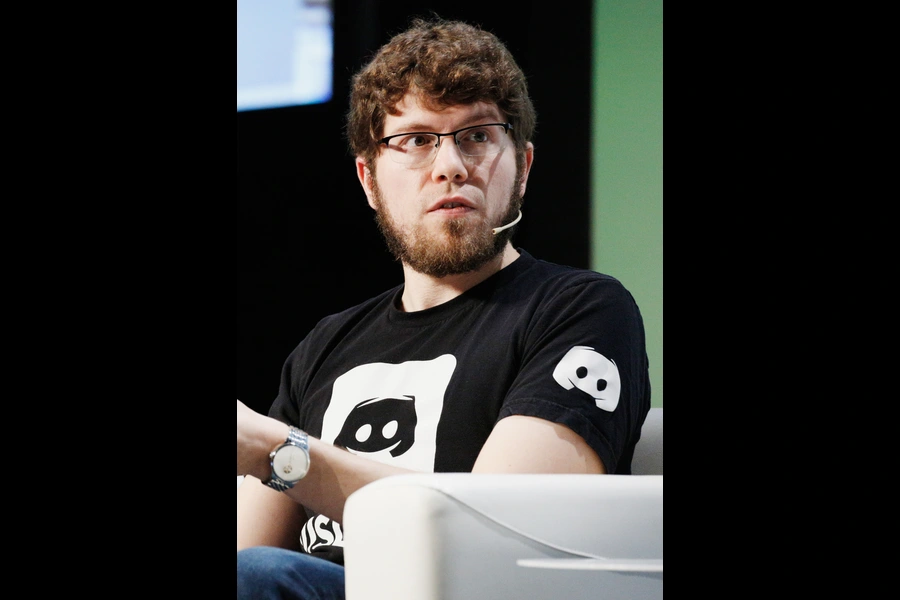
After school, he worked at studios including Double Fine Productions before launching his first real company in 2009. That company was OpenFeint.
Stanislav Vishnevskiy came from a different direction. Before joining Citron, he had founded a platform called Guildwork—a social client built specifically for Final Fantasy XIV players, the deeply committed audience of the long-running Square Enix MMORPG. Guildwork gave FFXIV players a way to stay connected outside the game: chat, screenshots, guild coordination. Vishnevskiy understood better than almost anyone what it meant to build tools for people whose hobby was also their community. He joined Citron at Hammer & Chisel in April 2013 as the company developed Fates Forever, and the two would go on to co-found Discord together.
The Success Before Discord: OpenFeint
Before any of the failures, there was a significant win.
OpenFeint launched in 2009 during a brief, chaotic window when mobile gaming was still new enough that no one had figured it out. The App Store had only opened the year before. Developers were building games but had no easy way to add social features—leaderboards, achievements, friend lists, multiplayer matchmaking. Citron saw that gap and built a platform that let developers plug in social functionality with minimal effort.
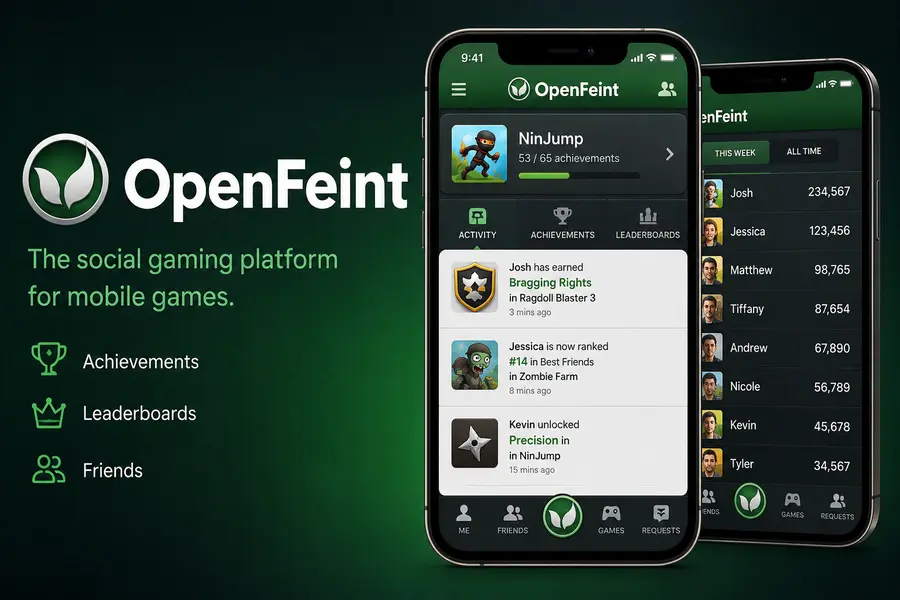
It worked. By 2011, OpenFeint had over 100 million users and more than 7,000 games integrated into its platform. In April of that year, Japanese gaming company GREE acquired it for $104 million in cash.
Citron was twenty-six years old.
The sale taught him things that would shape every decision he made afterward. He had built something people used at scale. He had seen what network effects looked like up close. He had watched OpenFeint get shut down by GREE in December 2012—a humbling reminder that selling a company means losing control of it. And he had developed a deep intuition about what gamers wanted from the spaces around their games, not just the games themselves.
Following the acquisition, he spent time as an entrepreneur-in-residence at YouWeb, the incubator that had helped fund OpenFeint. He wasn’t done building. He was already thinking about what came next.
Hammer & Chisel and the Dream of Building a Game
In April 2012, Citron founded a new studio, initially called Phoenix Guild. The name would later change to Hammer & Chisel, but the vision was consistent from the start: build multiplayer games for tablets.
At the time, this felt like a reasonable bet. The iPad was still relatively new, and tablets were gaining ground fast. Research firms were projecting that tablet sales would eclipse PCs within a few years. Traditional game genres hadn’t been reinvented for the format yet. Citron wanted to be the first to bring the kind of deep, social multiplayer experience that had made games like League of Legends popular on PC to the touchscreen.
In November 2013, Hammer & Chisel closed an $8.2 million Series A round led by Benchmark’s Mitch Lasky—the same investor who had backed League of Legends developer Riot Games. The signal from investors was clear: there was real appetite for a company trying to do for tablets what Riot had done for PC gaming. Additional investors included Accel Partners, IDG Capital Partners, and Time Warner.
The game they were building was called Fates Forever.
The Rise and Fall of Fates Forever
Fates Forever launched in the summer of 2014. It was, by genre, a mobile MOBA—a multiplayer online battle arena modeled loosely on the gameplay style that had made League of Legends and Dota 2 among the most-played games on earth. It was designed exclusively for tablets and featured built-in voice and text chat, which at the time was genuinely unusual for a mobile game.
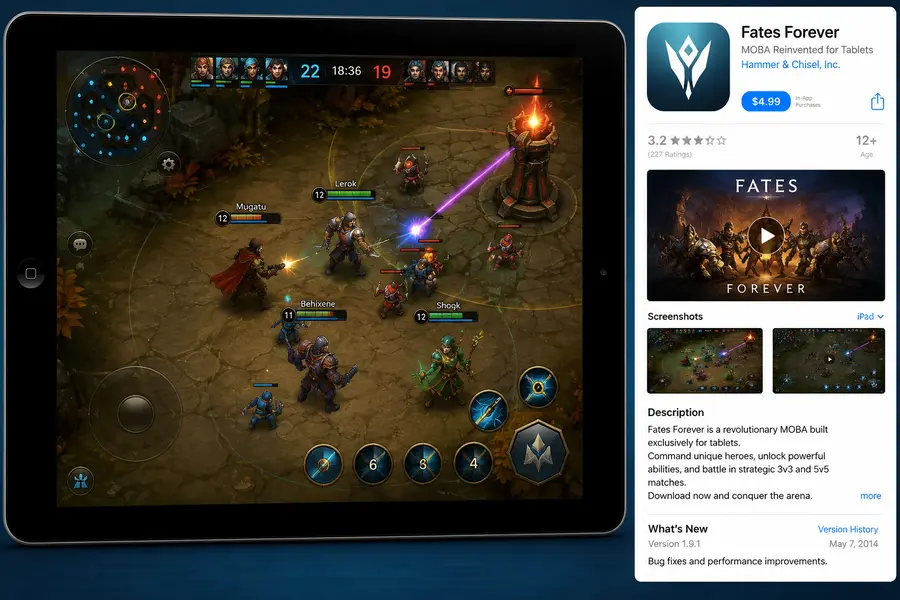
Critics received it reasonably well. The mechanics were sound. The visuals were competent. The communication features were, by many accounts, one of the best things about it.
But players didn’t show up in the numbers the company needed. The tablet gaming market that had looked so promising in 2012 and 2013 hadn’t materialized the way anyone expected. Gamers who wanted a serious competitive experience were still anchored to their PCs. The people who owned tablets were mostly casual users. The overlap between “serious MOBA player” and “tablet owner who wants to play MOBAs” was smaller than the market had hoped.
By early 2015, Citron and the team could read the data clearly. Fates Forever wasn’t going to work.
The Unexpected Discovery
Here’s what made the failure complicated to process: even as the game was struggling, one part of the Fates Forever experience kept producing evidence of genuine demand. The chat.
Players who found the game were using its communication tools with real enthusiasm. Voice quality mattered to them. The ability to coordinate in real-time mattered to them. And when the team looked beyond their own game—at how gamers in general were communicating while playing—they found a landscape of pain.
The dominant options were Skype and TeamSpeak. Skype was built for professional video calls and voice chats; it was clunky, prone to call failures, and not designed around the way gaming communities actually functioned. TeamSpeak worked reasonably well technically but required server setup that was intimidating for casual users. Neither tool felt like it had been designed with gamers in mind. Both were tolerated rather than loved.
Citron knew this problem firsthand. He and his team had been living it. Playing Final Fantasy XIV and League of Legends with colleagues meant constantly fighting against tools that weren’t built for what they were trying to do. They would lose track of who was talking. Calls would drop at the worst moments. Setting up a session required friction that shouldn’t have been there.
Vishnevskiy, through his work on Guildwork, had spent years studying how FFXIV players communicated and organized. He had a user base. He had an intimate understanding of what those players wanted.
The realization that shifted everything wasn’t dramatic. It was more like a slow accumulation of evidence reaching a threshold: the problem they had stumbled into while building Fates Forever—the communication problem—was bigger than the game itself. And they were in a position to solve it.
The Decision to Pivot
Pivots in startups are rarely as clean as they sound in retrospect. The word implies a single moment, a boardroom decision, a clean line between before and after. The reality is usually messier. And more personal.
For Hammer & Chisel, the pivot away from Fates Forever meant shutting down the game development team. Which meant telling people who had believed in what they were building—who had moved cities, turned down other jobs, spent nights and weekends making something—that it was over. The company cut roughly a third of its staff. These weren’t just headcount reductions. They were individuals who had signed on to make a game.
Citron has been candid about how hard that period was. Calling it a pivot, using the clean startup vocabulary, understates the weight of it.
What they were left with was a communication product, a skeleton crew, and a bet.
“When we decided to go all in on Discord, we had maybe ten users,” Citron would later say. One group playing League of Legends. One WoW guild. Not much else. The team would demo the product to friends, and the friends would nod, say it looked cool, and then never open it again. Early engagement data was discouraging. Voice calls would fail. Quality wavered. The honest question at that moment wasn’t why Discord might succeed—it was why anyone would abandon a tool they already hated for a new tool they’d probably just learn to hate differently.
The team didn’t rationalize their way past that question. They answered it by rebuilding. The voice infrastructure was torn down and rebuilt from scratch—not once, but three times in the first few months of Discord’s life. Each rebuild made the product meaningfully better. When they added robust community management tools—the ability to assign roles, moderate channels, ban users—something shifted. Early testers stopped tolerating Discord and started preferring it. Then they started telling people about it.
The name “Discord” came together somewhere between February and March 2015. Citron chose it because it sounded cool, had something to do with talking, was easy to say and spell, and happened to be available for trademark registration. Practical reasons, mostly. The name fit anyway.
Launching Discord in 2015
Discord launched publicly on May 13, 2015—though calling it a formal launch overstates how deliberate the moment was. The company has since documented its early history on the Discord Blog.
What happened was this: someone posted a link to a Discord server in the Final Fantasy XIV subreddit. The post was about the game’s upcoming first expansion, Heavensward, which had generated significant community excitement. People clicked the link. Citron, watching in real time, jumped into the server and started talking directly with the strangers who had wandered in. He answered questions. He engaged with feedback. He behaved less like a founder watching a product metric and more like someone who genuinely wanted to know what these specific people thought.
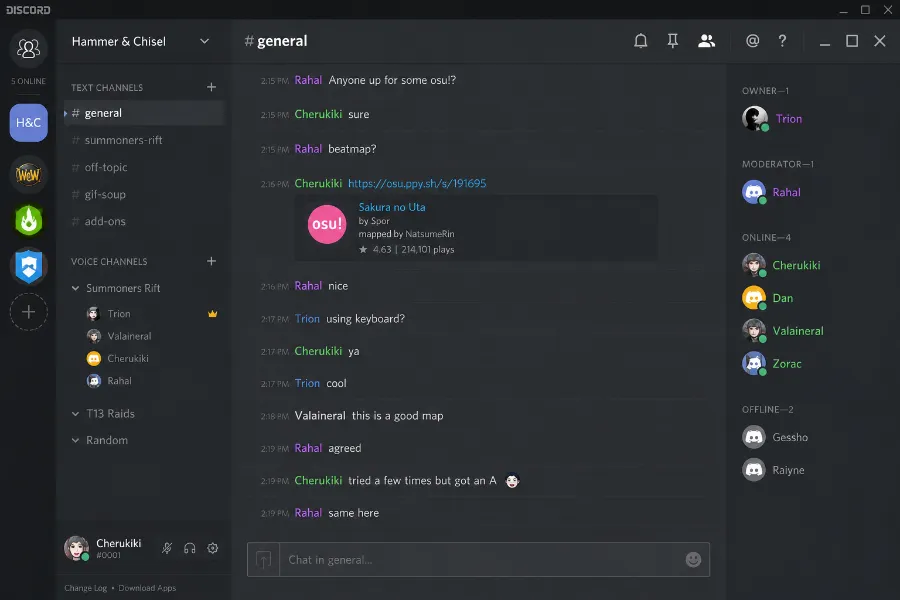
A few hundred people joined Discord that day. The word began to spread from there.
The timing with the FFXIV community was not entirely coincidental. Vishnevskiy had spent years building Guildwork for FFXIV players and had a pre-existing base of users he could recruit as early Discord adopters. The game’s community was organized, communicative, and already thinking about how to coordinate for Heavensward. Discord had been designed partly with those needs in mind.
The company’s leadership was unusually present in those early weeks. Citron participated in Reddit AMAs—at one point identified only as “illumina,” which turned out to be the CEO—where he answered questions about product roadmap, feature differences from competitors, and even the privacy policy. Vishnevskiy would spin up Discord servers personally to help users troubleshoot issues. They published feature launch videos at a relentless pace between 2015 and 2016, averaging about one every three weeks, often delivered with a sense of humor. A new keybinds feature launched with a custom rap. The ability to edit messages debuted with a dramatic fictional love story played out over a Discord chat. Those 21 videos averaged around 500,000 YouTube views each.
It was a growth strategy built on authentic engagement rather than advertising. And it worked.
Why Discord Grew So Quickly
Several things made Discord different from what existed before, and not all of them were obvious at the time.
The voice quality was the most immediate differentiator. The team had rebuilt the audio infrastructure three times before launch, and users noticed. Calls didn’t drop. Latency was low. Switching between voice and text didn’t require interrupting anything. For a community of people whose prior experience with voice chat involved accepting bad quality as a baseline, this felt like a revelation.
The server structure was something genuinely new. Discord servers weren’t chat rooms or group calls—they were persistent spaces with dedicated voice channels, text channels organized by topic, and the ability to simply exist in a voice channel without having to initiate a call. Vishnevskiy described the experience as being like “a neighborhood, or like a house where you can move between rooms.” Citron put it differently: “It created a place on your computer and on your phone where it felt like your friends were just around, and you could run into them and talk to them and hang out with them.”
That framing captured something real. Most communication tools required you to make a decision to communicate—to initiate a call, send a message, coordinate a time. Discord made it possible to just be present. You opened the app and saw that three of your friends were already in a voice channel. You could join in one click. The social friction had been almost entirely removed.
There were no follower counts. No algorithmic feeds. No gamification systems telling you to post more or engage more. Discord servers were opt-in communities with their own cultures, and they grew or didn’t grow based on whether the people in them wanted to be there. For users who were increasingly exhausted by the performance dynamics of platforms like Twitter and Facebook, this simplicity felt like relief.
The gaming community’s organic adoption patterns also helped enormously. Gaming subreddits started replacing their IRC links with Discord links. Esports communities moved in. Twitch streamers began using it to keep connected with their audiences. The World of Warcraft and Diablo communities—large, organized, and always looking for better tools—adopted it early. Each community that arrived brought others behind it.
The Discord Growth Timeline
| Year | Milestone | Funding | Users / Notes |
|---|---|---|---|
| 2012 | Hammer & Chisel founded (as Phoenix Guild) | — | Game studio, tablet-focused |
| 2013 | Fates Forever Series A | $8.2M (Benchmark, Accel) | Tablet MOBA development begins |
| 2014 | Fates Forever launches | — | Voice/text chat features included; game underperforms |
| Early 2015 | Pivot to communication; Discord named | — | ~10 users at time of pivot; voice infrastructure rebuilt 3x |
| May 13, 2015 | Discord publicly launches | — | FFXIV Reddit post triggers first organic growth wave |
| Jan 2016 | 3 million users; growth of 1M/month | $20M raised (incl. Time Warner) | Discord becomes widely used by esports and LAN communities |
| Jul 2016 | 11 million users | — | PC Gamer names it best VoIP service |
| Dec 2016 | 25 million users | — | Non-gaming servers begin appearing (fantasy sports, trading) |
| End 2017 | Nearly 90 million users | — | ~1.5M new users per week |
| 2018 | 130 million registered users | — | Third anniversary; non-gaming use grows |
| 2020 | 140M monthly active users | $7.3B valuation | COVID-19 pandemic drives surging adoption |
| Apr 2021 | Microsoft acquisition offer declined | — | Reported $12B offer rejected; company opts to stay independent |
| Sep 2021 | $500M raised | $15B valuation | Sony Interactive Entertainment among investors; PSN integration discussed |
| Jan 2024 | ~200M MAUs | — | 17% workforce reduction to “sharpen focus” |
| Apr 2025 | Jason Citron steps down as CEO | — | Humam Sakhnini (ex-Activision Blizzard) named CEO |
| Jan 2026 | Confidential IPO filing with SEC | — | Goldman Sachs and JPMorgan Chase as lead underwriters |
| Dec 2025 | 231M monthly active users | — | 54% of users in non-gaming communities |
How Discord Expanded Beyond Gaming
The gaming origins gave Discord its initial energy, but the platform’s design turned out to be useful for almost any community that wanted a shared space.
The expansion happened organically and then was accelerated by external events. By 2018, Discord’s own data was showing that while gaming servers were still the majority, meaningful clusters of non-gaming activity had formed—stock trading discussions, fantasy football leagues, fan communities around TV shows and music artists. Discord wasn’t pushing users into these verticals; users were pulling the platform there.
COVID-19 in 2020 dramatically accelerated everything. When in-person gatherings became impossible, communities of all kinds needed somewhere to exist. Discord had the infrastructure. Students started using it for study groups. Teachers used it to maintain classroom communities. Developers built entire professional networks on it. Artists found it to be the most functional space on the internet for building creative communities. As users grew exhausted by the performative dynamics of mainstream social media, Discord’s structure—closed servers, opt-in membership, no public metrics on your posts—offered something that felt more human.
Large AI communities also found Discord particularly well-suited to their needs. Midjourney, the AI image generation company, famously built its early product almost entirely on Discord, using the platform as both a deployment environment and a community hub. Tens of millions of people encountered AI tools for the first time inside a Discord server. By late 2025, roughly 54% of Discord’s monthly active users were in non-gaming communities.
The creator economy found a home there too. Streamers, podcasters, writers, and musicians discovered that Discord offered a more intimate alternative to the broadcast model of YouTube or Instagram—a place where real fans could exist as a genuine community rather than an audience. Discord eventually built monetization tools to support this: server subscriptions, premium memberships, and creator-focused features.
What Made Discord Different?
To understand why Discord won, it helps to understand what every other communication tool in 2015 got wrong.
Skype wanted you to make a call. TeamSpeak wanted you to configure a server. IRC wanted you to know what IRC was. Each of them treated communication as a transaction—something you initiated, completed, and ended. You set up a call. You had the call. You hung up. The assumption baked into every competing product was that talking was a deliberate, bounded activity.
Discord built around a different assumption entirely. Vishnevskiy described the product as feeling like “a neighborhood, or like a house where you can move between rooms.” That metaphor is precise. You don’t schedule time to exist in your house. You just live there. Discord’s servers worked the same way—persistent spaces where voice channels stayed open, where you could wander in and find three friends already talking and just join, where the social friction of initiating contact had been almost entirely removed.
There were no follower counts. No algorithmic feeds deciding what you saw. No engagement metrics telling you whether your post landed. On every other platform in 2015, these systems were being refined and amplified. Discord simply didn’t have them—not as a philosophical stance at first, but because the product didn’t need them. And that absence, it turned out, was exactly what an exhausted corner of the internet was looking for.
The founder presence in those early weeks mattered more than any marketing campaign could have. Citron showed up in Reddit AMAs under an anonymous username—”illumina”—answering technical questions, explaining the roadmap, debating the privacy policy with strangers at midnight. Vishnevskiy would personally spin up servers to help users troubleshoot problems. The message this sent, consciously or not, was that the people building Discord were the same kind of people using it. That trust compounded.
Then came the Microsoft moment.
In April 2021, Microsoft reportedly offered to acquire Discord for around $12 billion. Discord at the time was valued at roughly $7.3 billion—meaning the offer represented a significant premium, an exit that would have made the founders and early investors extraordinarily wealthy overnight. Most companies at that stage take the call. Most founders at that stage take the money.
Citron’s explanation for declining was quiet and unspectacular. He and the team talked it through. Most of them wanted to keep building. So they did.
That choice—to turn down nearly double the company’s valuation in order to remain independent—was not a strategic masterstroke so much as a reflection of what the company had always been: people who believed they were building something whose best years were still ahead. Every major decision in Discord’s history, from rebuilding the voice infrastructure three times before launch to laying off a third of the company to abandon a game they’d spent years making, follows the same logic. Take the harder path if you believe in where it leads.
Failure Is Valuable Data
Fates Forever failed to attract enough players, but the founders discovered something unexpected: gamers loved the communication tools more than the game itself. Instead of ignoring failure, they treated it as market research. Sometimes a failed product contains the blueprint for a much bigger opportunity.
Rebuild Until Excellence
Discord’s voice quality wasn’t impressive at launch. Rather than settling for “good enough,” the team rebuilt the underlying infrastructure multiple times. The result was a product experience that users couldn’t stop recommending.
Founder Involvement Creates Loyalty
The founders personally answered questions, solved technical issues, and engaged with users. These interactions generated trust, improved retention, and created a culture that prioritized customer feedback from day one.
Vision Matters More Than Valuation
Discord’s leadership maintained confidence in their mission even when presented with lucrative acquisition opportunities. A strong vision helps founders make strategic decisions based on long-term impact rather than short-term rewards.
Product Design Shapes Communities
Discord’s structure wasn’t accidental. Persistent servers, voice channels, and community-focused design choices encouraged meaningful interactions. The platform’s culture emerged directly from the way the product was built.
Discord Won Because It Learned Faster Than It Failed
The journey from a failed game to a multi-billion-dollar platform proves that startup success is rarely a straight line. The founders listened to users, rebuilt relentlessly, stayed close to their community, protected their vision, and designed for human connection. Those lessons remain relevant for every founder today.
Frequently Asked Questions About Discord
Learn about Discord’s founders, launch, origins, success story, and the failed game that inspired the platform.
Who founded Discord?
Discord was co-founded by Jason Citron and Stanislav Vishnevskiy. Before Discord, Citron founded OpenFeint, a mobile gaming social platform acquired by GREE for $104 million in 2011. Vishnevskiy founded Guildwork, a social client for Final Fantasy XIV players. The two later worked together at Hammer & Chisel, the studio behind Fates Forever.
Why was Discord created?
Discord was created to solve communication problems faced by gamers. Existing tools such as Skype and TeamSpeak were either difficult to use or not optimized for gaming. Discord provided reliable voice and text communication with a simple user experience built specifically for online gaming communities.
What game led to Discord?
Discord originated from Fates Forever, a tablet-only MOBA game developed by Hammer & Chisel and released in 2014. Although the game struggled commercially, players actively used its communication features. That insight inspired the founders to focus on building a dedicated communication platform, which eventually became Discord.
When did Discord launch?
Discord officially launched on May 13, 2015. The platform began gaining traction when users from gaming communities, particularly the Final Fantasy XIV subreddit, started joining Discord servers and using the service organically.
How did Discord become successful?
Discord succeeded because it combined high-quality voice communication, easy-to-use server structures, strong community engagement, and perfect timing. The founders actively interacted with users, improved the product continuously, and offered a better experience than competing communication tools.
Was Discord originally a game company?
Yes. Discord was originally developed by Hammer & Chisel, a game development studio. After the commercial failure of Fates Forever, the company shifted its focus entirely to communication software. The success of Discord eventually transformed the company into Discord, Inc.
Conclusion
There’s a version of this story where Fates Forever works. Tablets take off the way everyone predicted. The MOBA finds its audience. Hammer & Chisel becomes a game studio, grows a respectable catalog, maybe sells to someone for a decent multiple. Jason Citron makes a clean, comfortable exit. Stanislav Vishnevskiy ships features for years.
In that version, Discord is someone else’s idea. Or nobody’s.
The version that actually happened is harder and stranger. The game failed in front of the investors who believed in it. A third of the company lost their jobs. The founder pivoted to a product he had ten users for, with voice infrastructure that barely worked, trying to convince gamers to abandon tools they already hated in favor of a tool they’d never heard of. The early weeks weren’t triumphant. They were a grind of small improvements, direct community engagement, and a stubborn refusal to accept that the data said what the data said.
What the data said was simple, once Citron allowed himself to read it plainly: the game wasn’t the product. The communication was. The players who had found Fates Forever weren’t falling in love with the combat or the graphics. They were falling in love with the feeling of being in the same room as their friends while they played. Nobody had built a tool that gave them that cleanly. Discord’s entire existence is the answer to that gap.
Ten years after the pivot, Discord has over 200 million monthly active users. More than half of them are in communities that have nothing to do with gaming. A former vice chairman of Activision Blizzard is running the company. Goldman Sachs and JPMorgan are prepping an IPO. AI communities that didn’t exist five years ago treat Discord as their default infrastructure.
None of those people knew they were waiting for a chat feature inside a failed tablet game.
That’s the thing about genuine product discovery—it rarely looks like discovery while it’s happening. It looks like bad numbers and hard conversations and a slowly forming suspicion that maybe you’ve been building the wrong thing. Understanding how Discord started means understanding that: it didn’t begin with clarity. It began with a failure that was honest enough to point somewhere better. The founders who change industries are usually the ones willing to follow that suspicion all the way to the end, even when the end means starting over.
Citron and Vishnevskiy followed it. They ended up somewhere nobody expected.
Least of all them.
For further reading on the people and decisions behind Discord’s rise, see also: [Jason Citron: The Founder Who Turned a Failed Game Into Discord], [How Discord Raised Funding Before Becoming a Gaming Giant], and [What Discord Teaches Every Startup Founder].
Disclaimer
This article is for informational purposes only. All facts, figures, and milestones referenced are based on publicly available information and verified sources accurate as of June 2026. StartupOrigins is not affiliated with Discord Inc., Hammer & Chisel, or any individuals mentioned in this article. Company valuations, user statistics, and funding figures are sourced from public reports and may not reflect real-time data. This article does not constitute financial, investment, or legal advice.
How Canva Started From a University Project in Perth
Discover how Melanie Perkins turned a simple university idea into Canva, one of the world’s most valuable startups.
How Notion Almost Died Before Rebuilding in Japan
The incredible comeback story of Notion, from near bankruptcy to becoming one of the world’s leading productivity platforms.

Anup Kumar Yadav is the founder of StartupOrigins.xyz, where he researches and publishes detailed stories about the world’s most successful startups. His work explores founder journeys, funding milestones, growth strategies, and the lessons entrepreneurs can learn from them.